

Understanding Grid-Tied Solar Systems in Cape Town
Solar energy is transforming how South African homes and businesses manage electricity. In Cape Town, where energy costs are rising and Eskom’s supply can be unpredictable, grid-tied solar systems offer a practical and financially sound solution. These systems connect your solar panels directly to the national grid, allowing you to generate your own power while still having access to Eskom when needed.
In this post, I will explain how grid-tied solar systems work, their benefits, financial impact, and why they are an excellent choice for Cape Town properties aiming to reduce reliance on Eskom and control energy costs.
What Are Grid-Tied Solar Systems?
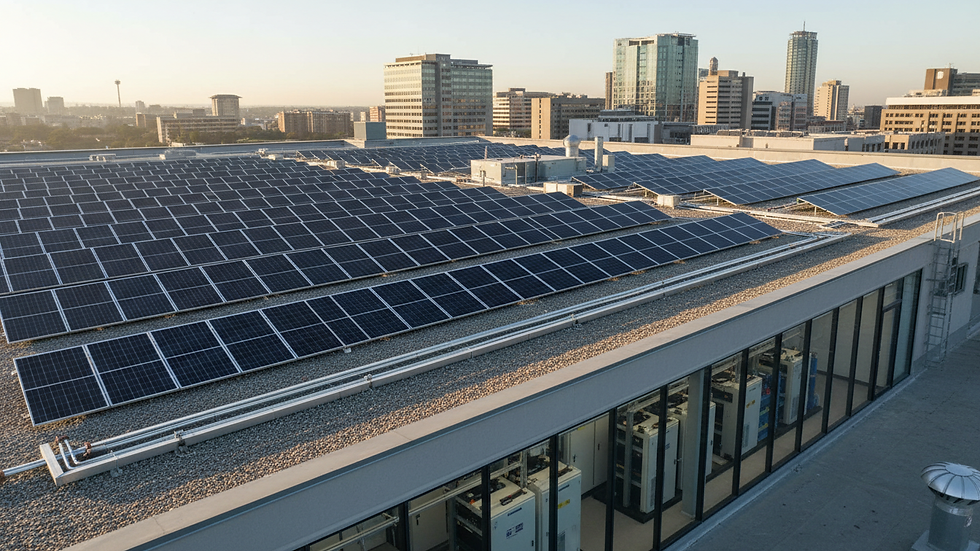
Grid-tied solar systems are photovoltaic (PV) setups that feed electricity into your property’s electrical system and the national grid simultaneously. Unlike off-grid systems, they do not require batteries for energy storage, which reduces upfront costs and maintenance.
How It Works:
Solar panels convert sunlight into DC electricity.
An inverter converts DC to AC electricity compatible with your home or business.
Excess electricity flows back into the grid, earning you credits or reducing your electricity bill.
When solar production is low, power is drawn from the grid seamlessly.
This setup is ideal for locations like Cape Town, where sunlight is abundant but grid power remains essential during cloudy days or at night.
Key Benefits of Grid-Tied Solar Systems in Cape Town
Installing a grid-tied solar system offers measurable financial and operational advantages:
Reduce electricity bills by up to 60%: Generate your own power during the day and export surplus energy.
Short payback periods: Typical ROI is between 3 to 5 years depending on system size and consumption.
No battery costs or maintenance: Lower initial investment and fewer components to service.
Increase property value: Solar installations are attractive to buyers and tenants.
Support sustainability goals: Reduce carbon footprint and reliance on fossil fuels.
For commercial properties, petrol stations, schools, warehouses, farms, and SMEs, these benefits translate into significant cost savings and energy security.

Financial Impact and Return on Investment
Understanding the financial implications is crucial when considering grid-tied solar systems. Here’s a breakdown of what you can expect:
Cost Savings
Average electricity tariffs in Cape Town have increased by approximately 8% annually over the past 5 years.
A 10 kW system can save between R10,000 and R15,000 per year on electricity bills.
Exporting excess energy to the grid can offset costs further, depending on municipal net metering policies.
Payback Period
With current incentives and tariffs, most grid-tied systems pay for themselves within 3 to 5 years.
After payback, the system generates free electricity for 15-20 years or more.
Return on Investment (ROI)
ROI typically ranges from 15% to 25% annually.
Businesses benefit from predictable energy costs, improving budgeting and financial planning.
Example:
A warehouse in Cape Town installs a 20 kW grid-tied system costing R350,000. With annual savings of R50,000, the payback period is 7 years. After that, the warehouse enjoys reduced operational costs and protection against tariff hikes.
Technical Considerations for Cape Town Installations
When designing and installing grid-tied solar systems, several technical factors must be considered to maximize performance and compliance:
System sizing: Match the system size to your average daily consumption and roof space.
Inverter quality: Use high-efficiency inverters with grid synchronization capabilities.
Grid compliance: Ensure the system meets City of Cape Town and Eskom regulations.
Roof orientation and shading: South-facing roofs with minimal shading yield the best results.
Monitoring systems: Real-time monitoring helps track performance and detect issues early.
Proper engineering and installation are critical to achieving the expected ROI and system longevity.

Why Choose a Grid-Tied Solar System Over Other Options?
For many Cape Town properties, grid-tied solar systems strike the perfect balance between cost, reliability, and energy independence.
Compared to Off-Grid Systems:
No need for expensive battery banks.
Continuous power supply from the grid during low solar production.
Lower upfront and maintenance costs.
Compared to Hybrid Systems:
Simpler design and installation.
Faster ROI due to fewer components.
Ideal for properties with reliable grid access but high electricity costs.
Strategic Energy Management
Grid-tied systems allow you to:
Reduce peak demand charges.
Participate in net metering or feed-in tariff programs.
Scale your system as energy needs grow.
Taking the Next Step: Secure Your Energy Future Today
If you are serious about reducing Eskom reliance, controlling energy costs, and securing uninterrupted power, a professionally engineered grid-tied solar system is your best option.
At Elicity, we specialize in designing and installing tailored solar solutions that prioritize ROI, resilience, and long-term energy security for South African homes and businesses.
Contact us today to discuss your project and get a free consultation:
📞 021 140 8248
Make the smart investment in your energy future with a grid-tied solar system designed for Cape Town’s unique environment and energy landscape.


Comments